If you are shopping on the Upper West Side, one question comes up fast: pre-war or post-war? It sounds simple, but in Manhattan, that choice shapes how your home looks, how it lives day to day, and how your monthly costs may feel over time. If you want to make a smart move without getting lost in style buzzwords, this guide will help you compare both options on the Upper West Side and choose with more clarity. Let’s dive in.
Why this choice matters on the Upper West Side
The Upper West Side still leans strongly pre-war. The Department of City Planning describes large pre-war apartment buildings along Riverside Drive and West End Avenue, and market sources point to Central Park West as one of the city’s standout collections of pre-war residential buildings.
At the same time, the neighborhood also has a clear post-war layer. Planning materials identify 1950s tower-in-the-park developments like Park West Village and Frederick Douglass Houses, which means your search may include very different building styles within the same broader neighborhood.
In New York real estate shorthand, pre-war usually refers to buildings from the 1920s through World War II, while post-war usually refers to buildings from 1947 through 1990. These are market conventions, not legal categories, but they are still useful when you are narrowing down what fits your lifestyle.
What pre-war usually feels like
On the Upper West Side, pre-war apartments often come with the details many buyers picture when they imagine classic New York living. Think formal entry areas, separate rooms, hardwood floors, detailed moldings, and higher ceilings.
A common example is the classic six or classic seven layout. These homes often include a living room, formal dining room, kitchen, bedrooms, and an extra smaller room, along with hallways, foyers, or gallery space that create more separation between rooms.
That layout can feel elegant and private. On the Upper West Side, classic sixes are especially common and often offer roughly 1,500 to 2,000 square feet, at least nine-foot ceilings, large closets, and architectural details like cornices and moldings.
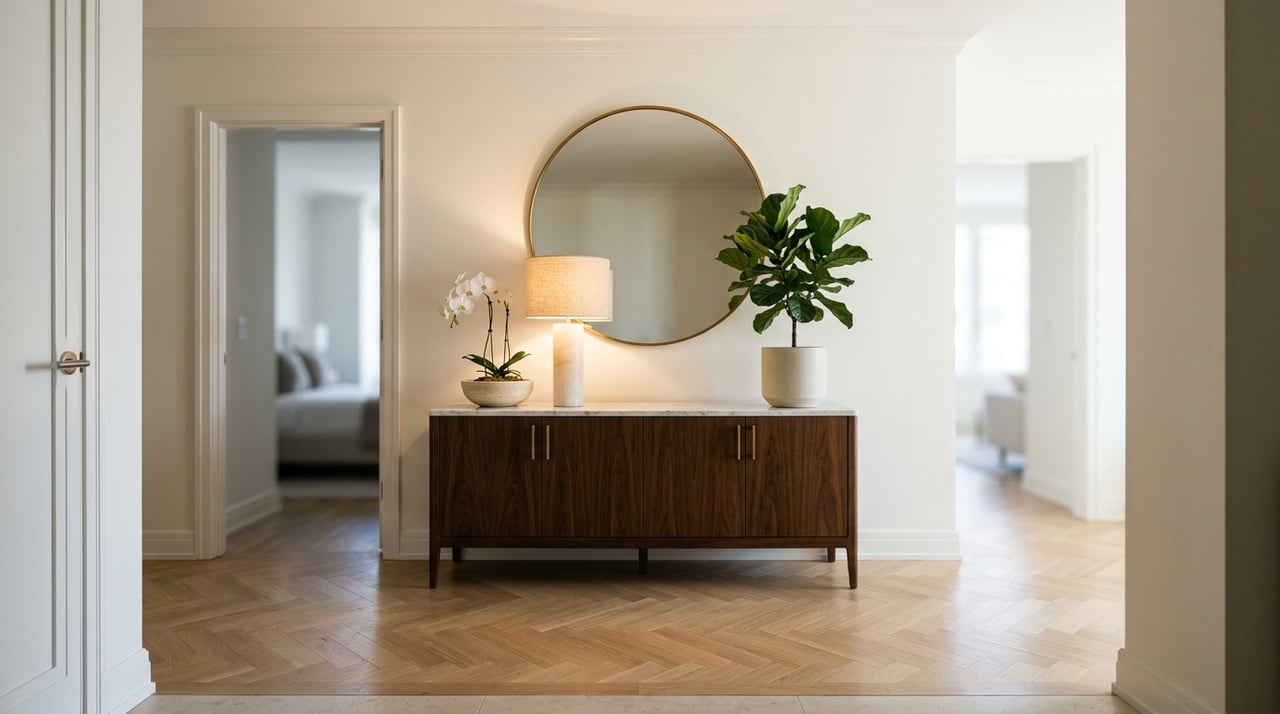
You may also see finishes that define the pre-war look. Herringbone hardwood floors, beamed ceilings, wainscoting, built-in bookshelves, and eat-in kitchens are all details that many buyers connect with older Upper West Side homes.
Why buyers love pre-war homes
Many buyers are drawn to pre-war apartments because they offer:
- Formal rooms with clear separation
- A more classic New York feel
- Original architectural detail
- Larger foyers, galleries, or hallways
- A stronger sense of privacy between living areas
If you work from home, host often, or simply like a home with distinct spaces, a pre-war layout can feel more natural than an open plan.
What post-war usually feels like
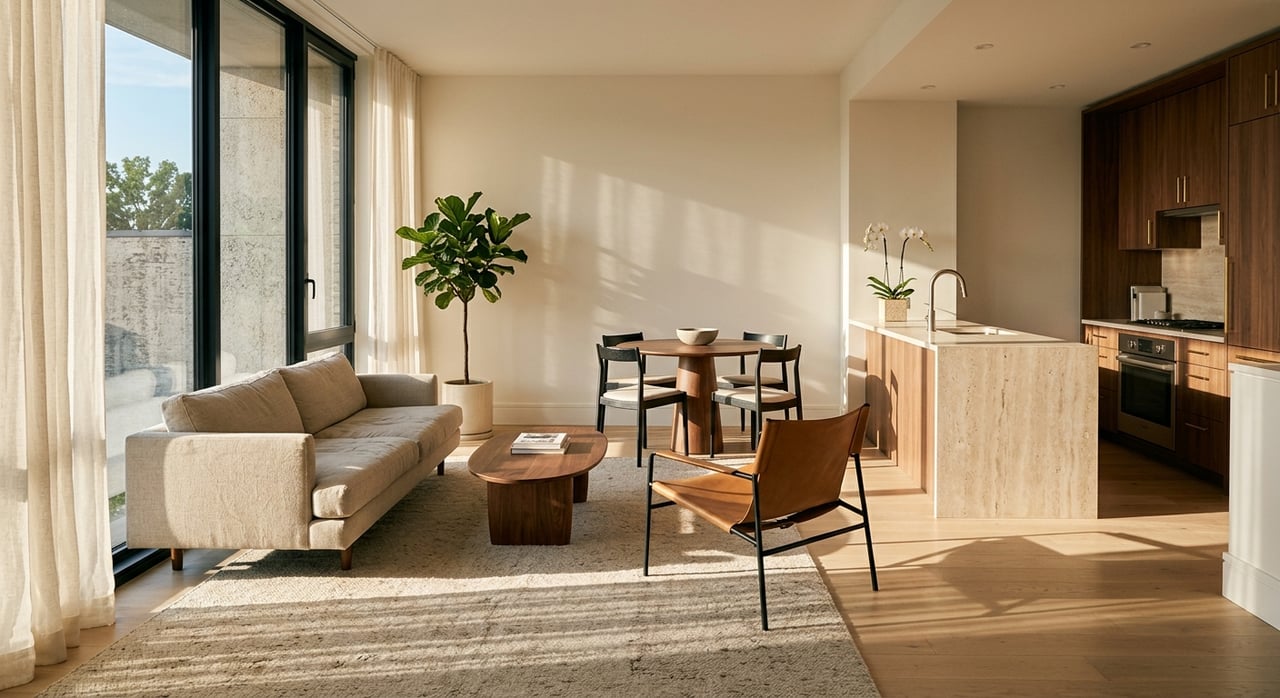
Post-war apartments on the Upper West Side often appeal to buyers who want function, simplicity, and a more contemporary daily flow. Layouts tend to be more predictable and efficient, with less formal separation between rooms.
These homes may include parquet flooring, lower ceilings, larger windows, generous closets, and built-in air conditioning. Some were designed as junior fours or with long living rooms that can be flexed into additional use areas, which can be helpful if you want extra versatility.
A 1960s Upper West Side condo example shows what many buyers like about post-war homes: split-bedroom layouts, open living and dining space, large closets, and a more modern interior feel. For some buyers, that practicality matters more than decorative detail.
Why buyers choose post-war homes
Post-war homes often fit buyers who want:
- More predictable floor plans
- Better storage and closet space
- More functional kitchen layouts
- Larger windows
- A more open and contemporary feel
If your priority is easy day-to-day living, cleaner lines, or a home that feels more plug-and-play, post-war may be the better fit.
Amenities can shift the decision
On the Upper West Side, amenities do not divide perfectly by building age, but the package often looks different. That is where your decision can become more practical than stylistic.
Some pre-war buildings are still full-service. A pre-war West End Avenue building, for example, offers a full-time doorman, laundry, common storage, and a bike room.
In many post-war and later condo buildings, the amenity list may be broader. That can include a full-time doorman and concierge, a package room, garage, laundry on every floor, bike storage, a gym, a roof deck, and an on-site management office.
Character versus convenience
This is not a strict rule, but there is a common pattern:
- Buyers focused on architectural charm often accept a more traditional service package.
- Buyers focused on convenience and newer-feeling systems often lean post-war or later construction.
- Some pre-war co-ops still offer strong full-service living, so it is important to evaluate each building on its own merits.
If you know you care deeply about a gym, package handling, garage access, or a broad amenity set, that may narrow your search quickly.
Monthly costs deserve a closer look
One of the biggest mistakes buyers make is assuming older means more expensive or newer means better value. On the Upper West Side, monthly carrying costs depend on much more than age alone.
For co-ops, maintenance typically covers operating expenses such as water and sewer, insurance, required loan payments, management and monitoring fees, and reserve contributions for large capital repairs. That means your monthly number is tied to how the building is run, not just when it was built.
Existing buildings also require ongoing repair work over time. Major cost items can include the facade, roof, elevator, plumbing, boiler, and electrical systems. That matters whether a building is pre-war or post-war, because building condition and capital planning can shape your long-term costs.
For condos, projected common charges and projected real estate taxes are budgeted separately under New York offering-plan rules. Once units are separately assessed, each condo unit is taxed as its own lot rather than taking responsibility for another unit’s unpaid taxes.
What to ask before you buy
Before you fall in love with any Upper West Side apartment, ask these questions:
- What does the monthly fee cover?
- How much is being reserved for capital work?
- Are any major repairs likely in the near future?
- Is this a co-op or a condo, and how are carrying costs structured?
- Are the services and amenities worth the monthly number for your lifestyle?
A lower monthly charge is not automatically a better deal. It may mean fewer services, less staffing, or deferred capital work. A higher monthly figure may reflect fuller service, stronger reserves, or a broader amenity package.
How to choose the right fit
For most Upper West Side buyers, this is less about which category is better and more about which one matches how you want to live. The best decision usually comes down to layout, comfort, service level, and budgeting.
Pre-war may be right for you if
- You love original details and classic New York architecture
- You prefer formal rooms over open layouts
- You want more separation and privacy between spaces
- You are drawn to classic six or classic seven floor plans
Post-war may be right for you if
- You want a more efficient layout
- You value storage and functional kitchen design
- You prefer a more open living area
- You want a broader amenity package or newer-feeling systems
A simple way to decide
When you tour apartments, pay attention to how your day would actually work in the space. Notice where coats go, where groceries land, how much privacy the bedrooms have, and whether the living area fits how you host, work, or unwind.
On the Upper West Side, both pre-war and post-war homes can be excellent choices. The smarter move is not chasing a label. It is understanding what each building offers and matching that to your priorities, budget, and long-term plans.
If you want help comparing co-ops, condos, carrying costs, and building tradeoffs on the Upper West Side, working with an advisor who knows Manhattan building stock can save you time and help you make a more confident decision. When you’re ready, connect with Bobby Rehani for thoughtful guidance tailored to your move.
FAQs
What does pre-war mean on the Upper West Side?
- On the Upper West Side, pre-war usually refers to buildings from the 1920s through World War II. It is a market term rather than a legal classification.
What does post-war mean in Upper West Side real estate?
- In New York market shorthand, post-war usually refers to buildings from 1947 through 1990, often with more predictable layouts and a more modern day-to-day feel.
Are most Upper West Side apartments pre-war?
- The Upper West Side still skews heavily pre-war, especially along areas like Riverside Drive, West End Avenue, and Central Park West, though the neighborhood also includes notable post-war development.
Are pre-war Upper West Side apartments larger?
- Many pre-war apartments, especially classic six layouts, offer larger rooms, separate dining areas, foyers or galleries, and high ceilings. Size and layout still vary by building and unit.
Do post-war Upper West Side buildings have better amenities?
- Many post-war and later condo buildings offer broader amenity packages, such as concierge service, package rooms, garages, gyms, and roof decks. Still, some pre-war buildings are also full-service.
Are pre-war or post-war Upper West Side homes cheaper each month?
- Not necessarily. Monthly costs are shaped by building structure, staffing, debt, reserves, maintenance needs, and whether the property is a co-op or condo, not by age alone.
What should you ask before buying an Upper West Side co-op or condo?
- Ask what the monthly fee covers, how much is being reserved for capital work, whether major repairs are likely, and how the building’s services and costs align with your budget and lifestyle.